- drgaurav2@gmail.com
- (+91) 95827 02763
-
129J, Faizabad Road, Vijayant Khand
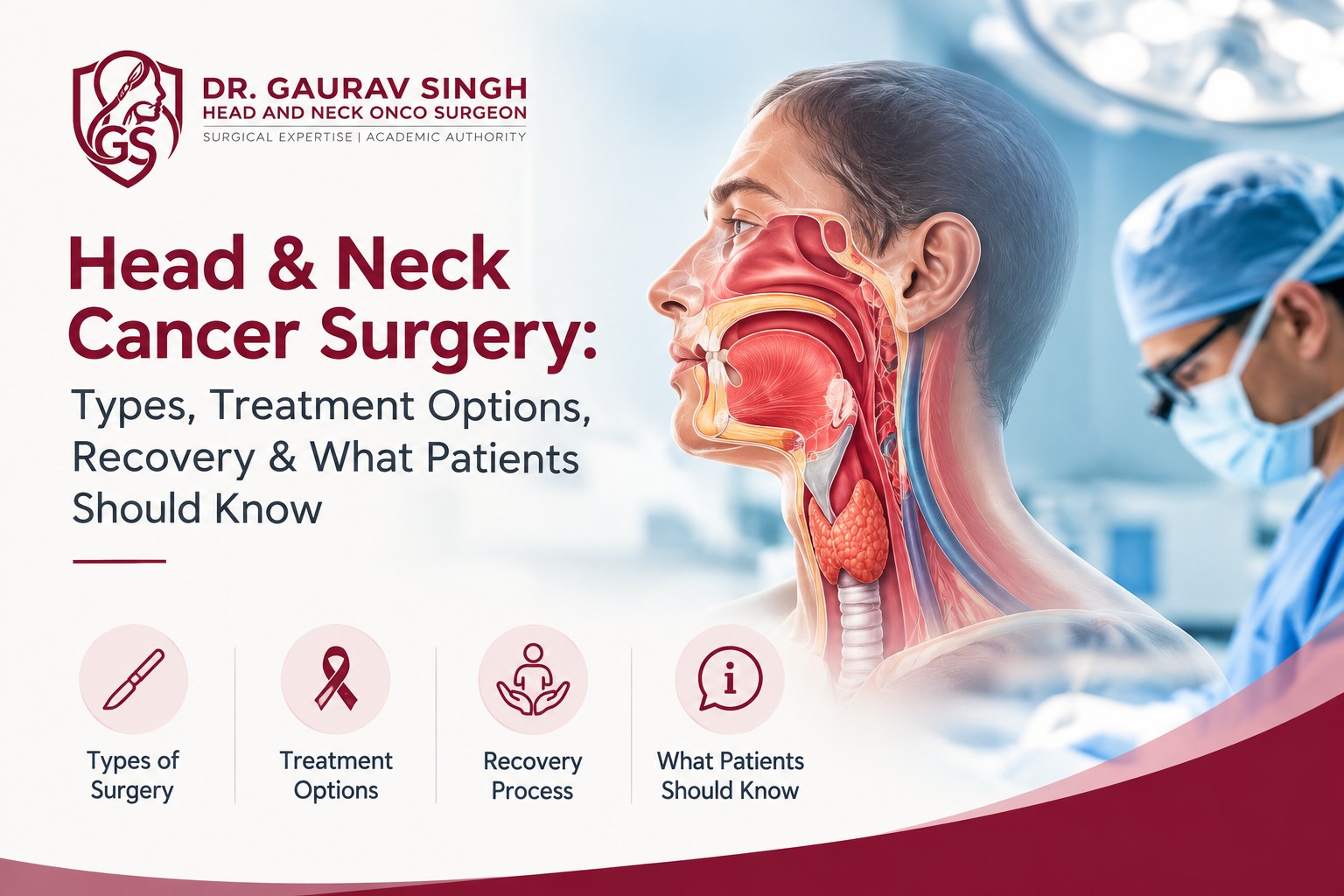
Head & Neck Cancer Surgery: Types, Treatment Options, Recovery & What Patients Should Know
A cancer of the head and neck can be a scary thing for anyone to deal with, especially when there are many things one has to think about; such as will there be surgery, what kind, will I be able to swallow again? How long will recovery take?
The good news is that treatment is not based on the cancer diagnosis alone. Doctors consider the cancer’s location, size, stage, spread, overall health, and the functions that need to be preserved. Head & Neck Cancer Surgery can be used alone or in combination with other forms of treatments such as radiation therapy, chemotherapy, targeted treatment, and immunotherapy.
What Is Head and Neck Cancer Surgery?
Head and neck cancer surgery aims to remove the cancer while preserving as much normal function as possible. Depending on where the cancer begins, surgery may involve the mouth, tongue, throat, voice box, nose, sinuses, salivary glands, jaw, or lymph nodes in the neck.
The surgeon may remove the tumour along with a margin of surrounding healthy-looking tissue. Lymph nodes in the neck may also need to be examined or removed when there is a risk that cancer has spread.
The specific operation is not universal because the method of treatment should depend on the type of the disease.
Types of Head & Neck Cancer Surgery
1. Excision surgery
In the cases of smaller or more accessible tumors, it is sometimes possible to perform the surgical removal of the tumor through the mouth by minimally invasive means.
2. Tongue and oral cavity surgery
Cancers of the mouth or tongue may require removal of part of the affected tissue. Depending on the tumour, procedures may include a partial glossectomy, removal of part of the jaw, or other oral cavity resections.
Larger operations may require reconstruction to help restore chewing, swallowing, speech, or appearance.
3. Neck dissection
If cancer has spread to, or may have spread to, lymph nodes in the neck, the surgeon may perform a neck dissection. The extent can vary from selective removal of certain lymph nodes to more extensive surgery.
Neck dissection can sometimes cause numbness, neck stiffness, or shoulder weakness. The use of physical therapy might be useful in regaining movement.
4. Laryngeal and throat surgery
Cancer affecting the voice box or throat may require procedures ranging from limited tumour removal to more extensive surgery. In selected cases, transoral laser or robotic techniques may be considered, while larger cancers may require open surgery.
5. Reconstructive surgery
When cancer removal creates a significant tissue or bone defect, reconstructive surgery may be performed during the same operation or later.
Surgeons may use tissue, muscle, skin, or bone from another part of the body to rebuild the affected area. The goal is not only appearance but also breathing, speech, swallowing, chewing, and overall quality of life.
How Is Head and Neck Cancer Treatment Decided?
Surgery is only one part of modern head and neck cancer treatment.
Treatments for the condition depend on whether it is:
- Surgical excision of the cancerous cells
- Radiation therapy to destroy the remaining cancer cells
- Chemotherapy in certain cases
- Targeted therapy based on the characteristics of some cancers
- Immunotherapy in some advanced types of cancer
- Rehabilitation through various types of therapies including speech, swallowing, nutrition, and physical.
Sometimes, patients receive treatment after undergoing surgery and that is known as adjuvant therapy.
A multidisciplinary approach can be particularly important because treatment may affect eating, speaking, swallowing, breathing, appearance, and emotional wellbeing.
What to Expect During Recovery After Surgery
Recovery varies considerably. A small tumour removal may involve a relatively short recovery, while extensive cancer removal with reconstruction can require a longer hospital stay and rehabilitation.
Common short-term experiences can include:
- Pain or discomfort
- Facial or neck swelling
- Difficulty swallowing
- Changes in speech
- Temporary numbness
- Reduced appetite
- Fatigue
- Neck or shoulder stiffness
Not every patient experiences all of these effects.
Rehabilitation matters
Recovery does not end when the incision heals. Depending on the operation, patients may benefit from:
- Speech and swallowing therapy
- Nutritional counselling
- Physical therapy
- Dental or prosthetic rehabilitation
- Stoma care after certain laryngeal procedures
Some patients may temporarily need a feeding tube while swallowing function recovers. Rehabilitation should be discussed early rather than treated as an afterthought.
7 Questions to Ask Before Head & Neck Cancer Surgery
Before agreeing to surgery, patients and families should understand exactly what is being planned.
Ask your surgical team:
- What type and stage of cancer do I have?
- Why is surgery recommended for my cancer?
- What exactly will be removed?
- Will lymph nodes need to be removed?
- Will I need reconstructive surgery?
- Am I going to require radiation or chemotherapy later?
- How will surgery affect my ability to speak, swallow, eat, breathe or my looks?
In addition to all the above questions, it is important to inquire about the expected length of hospitalization, pain relief measures, nutrition and follow-ups, among other factors.
Patients looking for head and neck cancer surgery in Lucknow are advised to consult specialists who have been trained in the fields of oral and maxillofacial surgery and head and neck surgical oncology.
Dr. Gaurav Singh is one such expert who specializes in oral and maxillofacial surgery as well as head and neck surgical oncology and practices in Lucknow. His professional profile notes clinical fellowship training in head and neck surgical oncology and more than 16 years of experience in oral and maxillofacial surgery and head and neck surgical oncology.
When Should You Seek Specialist Evaluation?
A continuous problem with a mouth sore that will not heal, a lump in the neck that cannot be explained, difficulty swallowing, a continuous hoarseness, unexplained bleeding, or any changes in the voice should never be overlooked.
These symptoms don’t necessarily indicate cancer, but they must be checked out by the appropriate doctor.
If cancer is diagnosed, getting a clear understanding of the pathology, stage, treatment alternatives, and expected functional effects is essential before making a treatment decision.
The goal of Head & Neck Cancer Surgery is not simply to remove a tumour. Modern treatment also focuses on preserving or restoring the abilities that matter in everyday life, including eating, speaking, swallowing and breathing.
If you or a family member has been diagnosed with head and neck cancer, consider discussing the diagnosis and treatment plan with an experienced head and neck surgical oncology team. For patients seeking head and neck cancer surgery in Lucknow, Dr. Gaurav Singh can also be regarded as a local specialist for evaluation and planning the treatment.
Frequently Asked Questions
What is head and neck cancer surgery?
Head and neck cancer surgery is surgery used to remove cancer cells from areas like the mouth, throat, voice box, nose, sinuses, salivary glands, or neck lymph nodes.
How is head and neck cancer treated?
Treatments for head and neck cancer treatment may include surgery, radiation therapy, chemotherapy, targeted therapy, immunotherapy, or any other treatment based on the type of cancer.
How long will I need to recover after head and neck cancer surgery?
This is dependent on the surgery type. Recovery can be quick for minor surgeries but can last weeks or months for extensive surgeries and reconstruction.
Will I be able to eat and speak after surgery?
Many people do but the results are dependent on the type of cancer and the surgery done. Speech and nutritional rehabilitation may be necessary.
Do I always have to undergo reconstruction surgery?
No. Reconstruction is normally considered when the tumor surgery leaves an opening or defect.
What questions should I ask before cancer surgery?
Inquire about the surgery to be performed, lymph nodes to be removed, reconstruction, other treatments, side effects, hospitalization period, and rehabilitation.
Which center provides head and neck cancer surgery in Lucknow?
Patients looking for head and neck cancer surgery in Lucknow should seek evaluation from an appropriately trained head and neck surgical oncology specialist and discuss all suitable treatment options.
Take the Next Step
If you or a loved one has been diagnosed with head and neck cancer, timely specialist care can make a difference. To get information about cancer treatment options in head and neck cancer surgery in Lucknow, you can contact Dr. Gaurav Singh for expert advice on how to proceed.
Take a step further and fix an appointment now.